 By Lauren Holland
Updated November 2026
Choosing 40′ wooden legs for kitchen island builds comes down to three things: height, leg width and whether the wood suits the finish you want. A 34 to 36 inch leg is the usual range for a standard counter-height island, so the listed height matters most. This guide compares six wooden legs we found on Amazon, looking at their dimensions, species, finish options and the kinds of projects they suit.
Our top picks at a glance
- 1
 TOP CHOICEBest overallHighland Manor Wood Products Square Tupelo Island LegView on Amazon
- 2
 TOP CHOICEBest for painted finishesEasy to Paint Pine Dining Table LegsView on Amazon
- 3
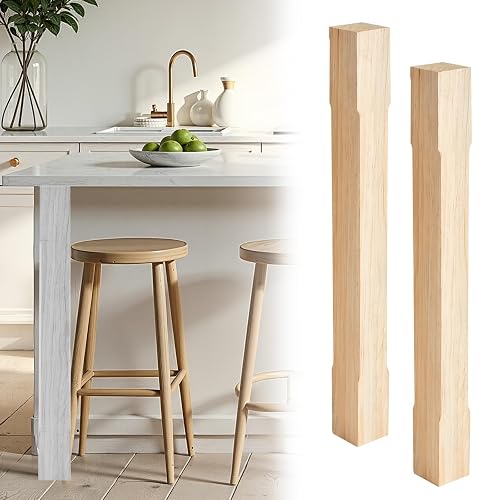 TOP CHOICEBest for farmhouse stylingNatural Farmhouse Kitchen Island PostsView on Amazon
- 4
 Best for tapered looksEkena Millwork Legacy Tapered Cabinet ColumnView on Amazon
- 5
 Best budget pick36" Rubberwood Unfinished Hardwood Island Table Leg PostView on Amazon
- 6
 Best for DIY handmade characterChunky Kitchen Island LegView on Amazon
Our Top Picks
Quick Comparison
| Product | Best for | Key feature |
|---|---|---|
| Easy to Paint Pine Dining Table Legs | Painted finishes | Unfinished pine, ready to paint |
| Highland Manor Square Tupelo Island Leg | Overall island height | 34 1/2 inch height, 4 inch square |
| Natural Farmhouse Kitchen Island Posts | Farmhouse styling | Square posts sold as a 2 pack |
| Ekena Millwork Legacy Tapered Cabinet Column | Tapered profile | 5 inch square with decorative blocks |
| 36″ Rubberwood Unfinished Hardwood Island Leg Post | Budget builds | 36 inch unfinished hardwood post |
| Chunky Kitchen Island Leg | Handmade DIY character | American pine, 5 x 34.5 inch |
Highland Manor Wood Products Square Tupelo Island Leg
Highland Manor Wood Products Square Tupelo Island Leg – 34 1/2" Tall x 4" Wide – Unfinished Wooden Leg for Kitchen Islands, Tables or Desks (Pine) (1 Leg)
Best for: Overall island height and a clean square look.
This leg suits builders who want a standard counter-height support without shaping the wood themselves. It is a good match for a simple box-style island.
Key specs
- 34 1/2 inch tall
- 4 inch wide, square profile
- Unfinished tupelo wood
Pros
- Standard counter-height length
- Clean square lines
- Ready for your chosen stain
Cons
- Needs sanding before finishing
- Limited decorative detail
Bottom line: A dependable choice for a straightforward island with a modern or transitional look.
Easy to Paint Pine Dining Table Legs
Easy to Paint Pine Dining Table Legs, DIY Unfinished Wooden Furniture, Dining Cottage Coffee Bench 4 Pcs Wooden Farmhouse Table Legs, 35.5"x3.5'', Raised Panel
Best for: Painted finishes on a budget-friendly build.
Pine takes paint evenly and is easy to cut, so this set works well for makers planning a colored or distressed island base.
Key specs
- Unfinished pine
- Sold as a 4 piece set
- Designed for dining and bench projects
Pros
- Takes paint well
- Lightweight to handle
- Easy to cut to length
Cons
- Softer than hardwood
- Dents more easily under heavy loads
Bottom line: Best for painted islands where the base will not carry extreme weight.
Natural Farmhouse Kitchen Island Posts
Natural Farmhouse Kitchen Island Posts, Square Table Legs for Countertop and Cabinet Projects 2 Pack Unfinished Pine Wood Island Legs, 34.5 x 3.5 Inch, Square Craftsman
Best for: Farmhouse styling with a sturdy square post.
These posts suit builders who want a chunky, traditional base for a countertop or cabinet project.
Key specs
- Square post profile
- Sold as a 2 pack
- Natural wood finish
Pros
- Pair sold together
- Suits rustic designs
- Simple to attach
Cons
- Limited size options
- Natural grain varies
Bottom line: A good match for a farmhouse island that needs two matching supports.
Ekena Millwork Legacy Tapered Cabinet Column
Ekena Millwork COL05X05X35LERW Legacy Tapered Cabinet Column (Top Block: 6", Bottom Block: 7"), 5"W x 5"D x 35 1/2"H, Rubberwood
Best for: A tapered, traditional profile with decorative detail.
This column suits islands that need a more formal look, with blocks at the top and bottom for a finished appearance.
Key specs
- 5 inch wide and 5 inch deep
- Top block 6 inch, bottom block 7 inch
- Tapered shaft
Pros
- Classic tapered profile
- Blocks add a finished look
- Works with traditional cabinetry
Cons
- More detail means more to fit
- Less suited to minimalist designs
Bottom line: Pick this for a formal island where the leg shape is part of the design.
36″ Rubberwood Unfinished Hardwood Island Table Leg Post
36" Rubberwood Unfinished Hardwood Island Table Leg Post – 1 PC (K22300-FW-RW)
Best for: Budget builds that still need hardwood strength.
Rubberwood is a dense hardwood, which makes this post a practical option for a load-bearing island base.
Key specs
- 36 inch length
- Unfinished hardwood
- Sold as one piece
Pros
- Dense hardwood
- Taller than standard length
- Takes stain and finish
Cons
- Sold individually, so you need several
- Requires sanding and sealing
Bottom line: A solid value for hardwood legs when you plan to buy the full set yourself.
Chunky Kitchen Island Leg
Chunky Kitchen Island Leg – Handmade in USA – American Pine – Perfect for DIY – Dimensions: 5" x 34.5"
Best for: Handmade character and a chunky DIY look.
This leg suits makers who want a bold, substantial base and enjoy a hand-finished appearance.
Key specs
- 5 inch by 34.5 inch dimensions
- American pine
- Made in USA
Pros
- Substantial, chunky width
- Domestic pine
- Good for rustic designs
Cons
- Pine is softer than hardwood
- Wide profile takes up more space
Bottom line: Choose this for a bold, handmade-style island with generous leg width.
Buying Guide
Check the height against your counter
Measure your finished countertop height first, then subtract the thickness of the top and any apron. A standard kitchen island is usually 36 inches, so a leg closer to 34 1/2 inches needs a top that makes up the difference. Confirm the numbers before cutting.
Good picks for this: Highland Manor Square Tupelo Island Leg, 36″ Rubberwood Unfinished Hardwood Island Leg Post
Match the wood species to the load
Hardwoods like rubberwood are denser and hold up better under heavy countertops and stools. Pine is lighter and easier to work but dents more easily. For an island that will see daily use, a harder species is usually the safer choice.
Good picks for this: 36″ Rubberwood Unfinished Hardwood Island Leg Post, Easy to Paint Pine Dining Table Legs
Think about leg width and proportion
A wide leg makes a heavy island look grounded, while a narrow one suits a light, open design. Compare the width to the overall island footprint so the base does not look undersized or bulky. Mock up the proportion with painter’s tape before you commit.
Good picks for this: Chunky Kitchen Island Leg, Natural Farmhouse Kitchen Island Posts
Decide on a finish before you buy
Unfinished legs give you full control over stain, paint or clear coat, but they need sanding and sealing. Pre-finished pieces save time but limit your options. Check whether the listing is raw wood or ready to paint before ordering.
Good picks for this: Easy to Paint Pine Dining Table Legs, Highland Manor Square Tupelo Island Leg
Consider the style details
Tapered shapes and decorative blocks suit formal or traditional kitchens, while plain square posts fit modern and farmhouse designs. Choose the profile first, then match the finish to your cabinets. Mixing too many details can make the island feel busy.
Good picks for this: Ekena Millwork Legacy Tapered Cabinet Column, Natural Farmhouse Kitchen Island Posts
FAQ
How tall should wooden legs for a kitchen island be?
Most standard islands are about 36 inches tall to the top of the counter. Subtract the countertop thickness and any apron from that figure to find the leg length. Measure your actual top before cutting, since thickness varies.
Is hardwood better than pine for island legs?
Hardwood is denser and generally handles heavy loads and daily wear better. Pine is easier to cut and paint but can dent. Choose hardwood for a working island and pine if you plan a painted, lighter-duty base.
Do I need to seal wooden island legs?
Yes, unfinished wood should be sanded and sealed to resist moisture, stains and wear. Use a finish suited to the species and the look you want. Follow the finish manufacturer’s drying and recoat instructions.
How do I attach wooden legs to an island?
Most builders use a mounting plate or corner brackets secured with screws into the frame. Check that each leg is plumb and level before tightening. For heavy stone tops, consult a professional or a structural engineer to confirm the connection can carry the load.
Conclusion
For most builders, the Highland Manor Square Tupelo Island Leg offers a standard height and clean look. Choose the Rubberwood post for a budget hardwood build, the pine legs for painted finishes, and the tapered Ekena column for a formal design. Measure your countertop height first, then match the species and profile to how the island will be used.
Sources
- Guidance on wood species and properties used in construction and woodworking (nps.gov)
- Research on wood strength, density and finishing performance (fpl.fs.usda.gov)
Before you buy: helpful guides
- Rolling Island for Kitchen: 7 Factors to Check Before You Buy
- Modern Kitchen Island Design Ideas: 8 Layouts That Work Well
- Counter Height Bar Stools for Kitchen Island: 5 Sizing Rules
- Kitchen Island Countertops Ideas: 7 Materials and Layouts That Work
- Lamp for Kitchen Island: How to Choose Size, Height and Placement
Related reading
- 7 Best Wooden Islands for Kitchen Options Compared in 2026
- 5 Best Rolling Kitchen Cart Island Options for Small Kitchens
- Kitchen Layout Types: One-Wall, Galley, L, U and Island
About Lauren Holland
Lauren Holland is part of our editorial team and reviews and edits our kitchen design & remodeling guides, checking product details against manufacturer specifications and owner feedback.