 By Colin Foster
Updated November 2026
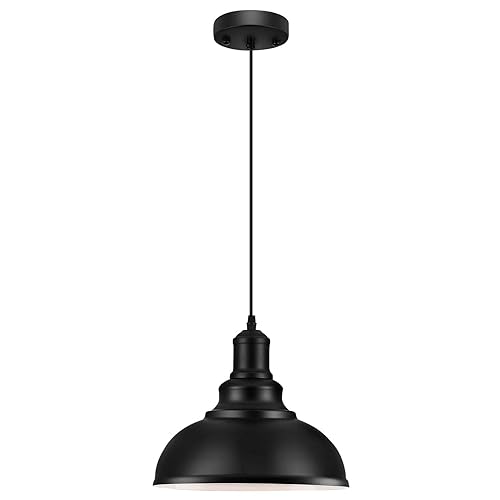
Modern kitchen lighting pendants give you focused task light, a strong visual anchor and a clean, architectural look over islands, sinks and dining nooks. This guide walks you through choosing the right style, sizing the fixture to the space, and hanging it at a height that works for both cooking and conversation. Most of the decisions come down to three measurements and one good layout plan.
Step 1: Decide Where the Pendants Will Work Hardest
Start with the task zones, not the fixture catalog. Pendants are best over islands, peninsulas, sinks and breakfast counters, where you need direct light on a work surface. If you are also upgrading the rest of the room, compare your plan with Pendants for Kitchen Island: How to Size, Space and Hang Them Right and Overhead Lighting for Kitchen: 7 Steps to Even, Glare-Free Light so the ambient layer does not compete with the pendants.
Shopping for one? See our guide: Top 4 Kitchen Lighting Ceiling Lights for Every Layout.
Step 2: Size the Fixtures to the Surface Below
A common rule is to keep the total pendant width at roughly one-half to two-thirds of the island length, measured across the surface. For a 96-inch island, two 12- to 16-inch-diameter pendants spaced evenly usually look balanced. Smaller kitchens often do better with one fixture; see Pendant Lighting Small Kitchen: 7 Steps to Scale and Hang It Right for scaling rules in tight rooms.
Step 3: Hang Them at the Right Height
For most modern kitchen lighting pendants, the bottom of the shade should sit 30 to 36 inches above the finished counter. Lower fixtures improve task light but can block sightlines across an island, so stay near the top of the range if people sit across from each other. Use a level and a tape measure, and mark the centerline of each pendant before drilling.
Step 4: Choose a Style That Matches Your Cabinets and Hardware
Modern pendant kitchen lighting tends to fall into a few families: simple metal domes, linear bars, glass globes and sculptural forms. Match the metal finish to your faucet or cabinet pulls, and keep the number of finishes in the room to two or three. If your look leans toward mid-century shapes, Mid Century Modern Lighting Kitchen: 7 Fixture Choices and Layout Rules covers proportions that carry over well.
Check the Bulb and Color Temperature
Specify 2700K to 3000K for a warm, relaxed room, or 3500K to 4000K for a crisper task feel. Choose a high color rendering index (CRI) if you care about accurate food and finish color. Dimmable LED drivers are worth confirming before you buy, since not every driver works with every dimmer.
Common Mistakes to Avoid
- Hanging pendants too high, which leaves the counter in shadow and creates glare from the bulb.
- Spacing fixtures unevenly relative to the island centerline.
- Ignoring the cabinet and sink placement, so a fixture lands where someone needs to open a door.
- Mixing too many finishes, which makes the lighting look busy rather than modern.
- Skipping a dimmer, which limits you to a single mood all evening.
Recommended Gear
- A laser level helps you mark a straight line for multiple pendants, which is the easiest way to avoid an off-center look. View on Amazon
- A dimmer rated for LED loads prevents flicker and buzzing when you lower the light. View on Amazon
- A stud finder with AC wire detection reduces the risk of drilling into a cable when you install a heavier fixture. View on Amazon
FAQ
How far apart should two kitchen pendants be?
Spacing usually falls between 24 and 36 inches center to center for two fixtures over a standard island. Adjust based on the fixture width and how far you want the light to spread.
Can I hang pendants myself?
Many homeowners can handle a straightforward swap on an existing junction box, but new wiring or a box that is not rated for the weight should be handled by a licensed electrician.
Should pendants match the other kitchen lights?
They do not need to match exactly, but a shared finish or shape creates a more cohesive look. Pick one repeated element, such as metal color, and let the rest vary.
Conclusion
Good modern kitchen lighting pendants depend on three things: the right size for the surface, the right height for light and sightlines, and a finish that ties into the rest of the room. Measure first, mark your layout carefully, and confirm the wiring before you drill. Following those steps will give you a clean, functional result that looks deliberate.
Related reading
Ready to choose one?
About Colin Foster
Colin Foster is part of our editorial team and reviews and edits our kitchen design & remodeling guides, checking product details against manufacturer specifications and owner feedback.