 By Lauren Holland
Updated November 2026
Choosing epoxy grout for kitchen countertops comes down to a handful of practical questions: will the joints see heat, standing water and daily cleaning, and how much work do you want to do during installation? This guide compares five products sold on Amazon US that fall into the grout, grout-repair and sealer categories a countertop project often calls for. The selection criteria were specifications stated by manufacturers, brand reputation in tile and surface work, and the patterns owners tend to report about adhesion, color consistency, cleanup and long-term staining. None of these products were tested by our team, so treat the notes below as a research summary rather than hands-on results.
Our top picks at a glance
- 1
 TOP CHOICEBest overallRed Devil 0425 Pre-Mixed Tile Grout – Professional Quality, WhiteView on Amazon
- 2
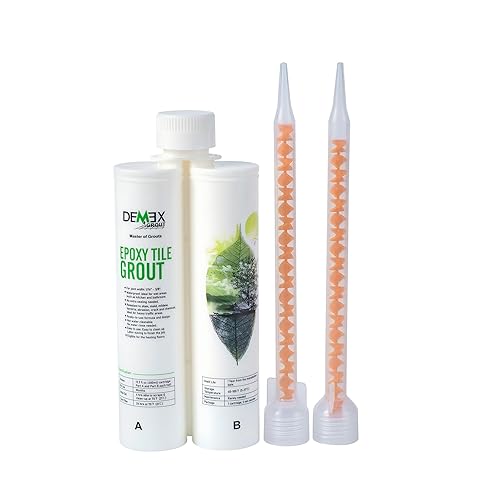 TOP CHOICEBest for seam-heavy countertopsEpoxy Grout for Tile & Stone, Warm Gray (Unsanded, Matt)View on Amazon
- 3
 TOP CHOICEBest for repairing existing jointsRestore & Renew Tile Joints Grout Filler, Ivory (8.8 oz)View on Amazon
- 4
 Best for DIY epoxy countertop projectsStone Coat Countertops Epoxy Undercoat, 1 Quart WhiteView on Amazon
- 5
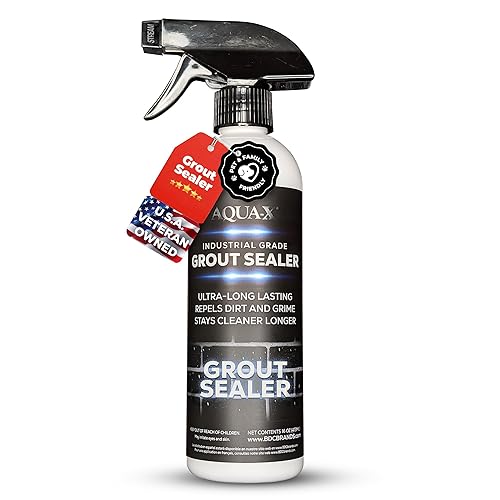 Best budget pick for sealing16 Oz. Grout Sealer, Clear, Natural FinishView on Amazon
Our Top Picks
Quick Comparison
| Product | Best for | Key feature |
|---|---|---|
| Red Devil 0425 Pre-Mixed Tile Grout | General joint filling and a familiar, widely available option | Pre-mixed, ready to apply, sold in a 5.5 oz size |
| Epoxy Grout for Tile & Stone (Warm Gray) | Seam-heavy countertops that need chemical and stain resistance | Waterproof, stain, mold and chemical resistant, ready to use |
| Restore & Renew Tile Joints (Ivory) | Refreshing worn joints without a full regrout | Squeeze tube, fast-drying filler and paint in one product |
| Stone Coat Countertops Epoxy Undercoat | DIY epoxy countertop surfaces and substrate prep | High-bond primer for MDF, plywood and porous surfaces |
| 16 Oz. Grout Sealer, Clear | Protecting finished grout lines on a budget | Clear, natural finish, fast drying, indoor and outdoor use |
Epoxy Grout for Tile & Stone, Warm Gray (Unsanded, Matt)
Epoxy Grout for Tile & Stone, Waterproof, Stain, Mold, Mildew, Crack & Chemical Resistant for Floor & Wall, Ready to Use, Easy to Apply & Clean (Warm Gray, Unsanded, Matt, 1 pk)
Best for: Seam-heavy countertops that need chemical and stain resistance
This is the product in the list most closely matched to the phrase epoxy grout for kitchen countertops. It is aimed at homeowners who want a joint material that handles spills, cutting-board stains and cleaning chemicals without a separate sealing step.
Key specs
- Unsanded formulation, suited to narrower joints
- Matte finish, Warm Gray color
- Ready to use, one component
- Listed as waterproof and resistant to stains, mold, mildew, cracking and chemicals
Pros
- Resistance claims cover the kinds of exposure kitchens see daily
- No mixing required, which reduces waste and mistakes
- Unsanded texture works well for narrow countertop joints
Cons
- Epoxy joints are harder to remove and correct once cured
- Color matching against existing stone or quartz can be difficult, so test a small area first
Bottom line: Best for homeowners who want a sealed, stain-resistant joint and are comfortable committing to the color before cutting into the job.
Red Devil 0425 Pre-Mixed Tile Grout – Professional Quality, White
Red Devil 0425 Pre-Mixed Tile Grout – Professional Quality, Excellent Adhesion, Ideal for Wall & Floor Use – 5.5 oz, White, Made in USA
Best for: General joint filling and a familiar, widely available option
This is a standard pre-mixed grout rather than a true two-part epoxy. It suits readers who want a simple, familiar joint filler for backsplash-adjacent or low-traffic countertop edges, and who understand the difference in performance before buying.
Key specs
- Pre-mixed, ready to apply
- White, 5.5 oz container
- Made in USA, per the listing
Pros
- Easy to apply with no mixing
- Owners often report good adhesion to tile-style substrates
- Small size is convenient for touch-ups
Cons
- Not an epoxy formula, so it is less resistant to heat and harsh cleaners than epoxy grout
- The small container covers only limited joint length
Bottom line: A reasonable choice for small repairs or joints that see light use. Anyone expecting true epoxy performance on a busy countertop should look at the epoxy options first.
Restore & Renew Tile Joints Grout Filler, Ivory (8.8 oz)
Restore & Renew Tile Joints, Fast-Drying Grout Filler & Paint, Squeeze Tube for Bathroom, Shower & Kitchen Floors, Waterproof Tile Grout Repair Kit, Refresh Tile, Grout Sealer (8.8oz, Ivory)
Best for: Refreshing worn joints without a full regrout
Restore-style products are built for surface refreshes. This suits homeowners whose existing grout has darkened or pitted near a sink or cooktop and who want to refresh it rather than remove and replace the whole run.
Key specs
- Squeeze tube format, 8.8 oz
- Ivory color
- Listed as a fast-drying filler, paint and sealer combination
- Sold as a waterproof grout repair kit
Pros
- Squeeze tube gives controlled placement in tight joints
- Avoids the dust and labor of grout removal
- Works on bathroom, shower and kitchen floors according to the listing
Cons
- A cosmetic refresh is not a structural fix for cracked or failing joints
- Color match depends on the existing grout tone, so results vary
Bottom line: Best for owners who need to restore appearance and water resistance on existing countertop joints and want to avoid a full regrout.
Stone Coat Countertops Epoxy Undercoat, 1 Quart White
Stone Coat Countertops Epoxy Undercoat 1 Quart (32 Fl Oz White) High-Bond Epoxy Primer for MDF, Plywood, and Porous Surfaces – Essential for DIY Epoxy Countertop Kits
Best for: DIY epoxy countertop surfaces and substrate prep
This is a primer rather than a joint filler, and it belongs in a discussion of epoxy countertop systems because it prepares porous substrates before the epoxy topcoat goes down. It is for DIYers building an epoxy surface over MDF or plywood, not for grouting tile.
Key specs
- 1 quart (32 fl oz), white
- Described as a high-bond epoxy primer
- Designed for MDF, plywood and porous surfaces
Pros
- Helps seal porous substrates ahead of an epoxy topcoat
- Marketed as part of a DIY epoxy countertop kit workflow
- White base can help a light-colored topcoat look even
Cons
- Not a grout, so it does not fill joints between tiles or stone slabs
- Adds steps and cure time to a project that already requires careful prep
Bottom line: Right for builders making an epoxy countertop from scratch. Skip it if your goal is simply to grout existing tile.
16 Oz. Grout Sealer, Clear, Natural Finish
16 Oz. Grout Sealer, Clear Grout and Tile Sealer, Natural Finish, Professional Grade, Indoor & Outdoor, Fast Dry and Long Lasting Protection
Best for: Protecting finished grout lines on a budget
Sealers do not replace epoxy grout, but they can extend the life of cementitious grout around a countertop. This suits homeowners whose joints are already in place and need a protective layer against spills and moisture.
Key specs
- 16 oz container
- Clear, natural finish
- Listed for indoor and outdoor use
- Described as fast drying with long-lasting protection
Pros
- Clear finish preserves the grout color
- Fast drying reduces wait time before use
- Useful as a maintenance product on any grout type
Cons
- Sealers need periodic reapplication and are not a permanent barrier
- Does not add the hardness or chemical resistance of a true epoxy grout
Bottom line: A sensible maintenance product for existing grout lines. It is not a substitute for choosing epoxy grout during installation.
Buying Guide
Grout Type: Epoxy vs. Cementitious
Epoxy grout is a resin-based material that cures harder and resists stains, moisture and cleaning chemicals far better than traditional cement grout. Cementitious grout is more forgiving to install and easier to correct, but it absorbs liquids and needs sealing. Check the product type on the label before assuming a grout is epoxy.
Good picks for this: Epoxy Grout for Tile & Stone, Red Devil 0425 Pre-Mixed Tile Grout
Joint Width and Fit
Epoxy grouts are often sold for specific joint widths. Narrow countertop seams need a finer, unsanded formulation, while wider joints may need a sanded mix for strength. Measure the joint before purchase and match it to the product’s stated use.
Good picks for this: Epoxy Grout for Tile & Stone, Restore & Renew Tile Joints
Color and Finish
Color matters more with epoxy than most homeowners expect, because the cured surface does not blend with neighboring materials the way a sealed cement grout sometimes does. Ask for a sample, test on an offcut, and check the finish: matte hides minor surface variation, while gloss shows it.
Good picks for this: Epoxy Grout for Tile & Stone, Restore & Renew Tile Joints
Application Method
Pre-mixed products avoid the ratio errors that can ruin two-part epoxy. Squeeze tubes give precise placement in tight joints. Two-part systems offer more control over cure time but demand careful mixing and a clean working window.
Good picks for this: Red Devil 0425 Pre-Mixed Tile Grout, Restore & Renew Tile Joints
Substrate and Surface Prep
Porous substrates such as MDF and plywood need a sealing primer before any epoxy topcoat. Joints in stone or tile need clean, dry, dust-free faces. Surface prep determines whether the finish bonds and stays put.
Good picks for this: Stone Coat Countertops Epoxy Undercoat, 16 Oz. Grout Sealer, Clear
Durability and Heat Exposure
Kitchen joints face hot pans, steam, acidic foods and frequent wet cleaning. Check whether the manufacturer lists resistance to chemicals, mold and cracking. Keep in mind that most epoxies are sensitive to very high direct heat, so use trivets.
Good picks for this: Epoxy Grout for Tile & Stone, 16 Oz. Grout Sealer, Clear
Care and Maintenance
Epoxy grout needs little sealing but still benefits from gentle, pH-neutral cleaners. Sealers on cement grout need reapplication every year or two in heavy-use kitchens, depending on the product directions. Avoid abrasive pads that dull the finish.
Good picks for this: 16 Oz. Grout Sealer, Clear, Restore & Renew Tile Joints
FAQ
Is epoxy grout good for kitchen countertops?
Yes, for many homeowners it is a strong choice because it resists stains, moisture and cleaning chemicals better than cement grout. It is harder to install and harder to fix once cured, so it works best when the joint width, color and surface prep are settled before you begin.
Can I use epoxy grout between countertop slabs?
Epoxy grout is typically designed for tile and stone joints. Between solid slabs, follow the fabricator’s or manufacturer’s guidance on seam filling, since many countertop seams use a specific adhesive or seam system rather than standard grout.
Does epoxy grout need to be sealed?
Most epoxy grouts are non-porous once cured and do not require a sealer, which is one of their main advantages. Cement grouts do need sealing. Always check the product directions, since some epoxy products recommend a surface finish or maintenance step.
How long does epoxy grout take to cure?
Cure time varies by product and temperature. Pre-mixed and ready-to-use products often set faster than two-part systems. Follow the stated working and full-cure times, and keep the area dry and at a moderate temperature during curing.
Can epoxy grout be removed if I make a mistake?
Removal is difficult. Once epoxy cures it bonds strongly to tile and stone, so mistakes often require careful grinding or scraping. Work in small sections, clean excess promptly as directed, and test color on a scrap piece first.
Is a grout sealer the same as epoxy grout?
No. A sealer is a coating applied over existing grout to reduce absorption. Epoxy grout is the joint material itself. Sealers can extend the life of cement grout, but they do not give the same chemical and stain resistance as an epoxy formula.
Should I consult a professional?
For countertop installations, especially with stone or large seams, consult a licensed installer or fabricator before choosing a material. Epoxy products also release fumes during application, so follow ventilation and protective equipment guidance on the label.
Conclusion
For most kitchen countertop joints where stain and chemical resistance matter most, the Epoxy Grout for Tile & Stone in Warm Gray is the closest match to the search intent. Homeowners who want a simple, familiar pre-mixed filler for light-use joints can look at the Red Devil 0425 Pre-Mixed Tile Grout, while those refreshing existing grout will find the Restore & Renew Tile Joints more practical. DIYers building an epoxy countertop from porous substrates should start with the Stone Coat Epoxy Undercoat, and anyone with cement grout already in place can protect it with the 16 Oz. Grout Sealer. Match the product to your joint, your substrate and your willingness to work with a curing material, and test your color before committing.
For more on preparing a countertop surface, see Epoxy Resin for Kitchen Countertops: A Step-by-Step Guide and Epoxy Coating for Kitchen Countertops: A Step-by-Step Guide to Doing It Right. If you are comparing finishes more broadly, Epoxy for Kitchen Countertops: 7 Best Picks Compared (2026) and Top 5 Coverings for Kitchen Countertops Compared (2026) offer useful context, and Kitchen Countertop Materials: Stone, Quartz and Care covers how joints interact with different slab types.
Sources
- Consumer safety guidance on ventilation and handling of adhesives, coatings and resin products (cpsc.gov)
- Workplace safety standards for chemical exposure and personal protective equipment (osha.gov)
- Kitchen design and countertop installation guidance from a professional trade association
Before you buy: helpful guides
About Lauren Holland
Lauren Holland is part of our editorial team and reviews and edits our kitchen design & remodeling guides, checking product details against manufacturer specifications and owner feedback.