 By Colin Foster
Updated November 2026
Good lighting for a farmhouse kitchen comes down to layers: general light for the room, focused light for the work surfaces, and warmer accents that suit the style. In this guide you will learn how to map those layers, size and place fixtures, and choose finishes that keep the look rustic without leaving you squinting at the cutting board.
Step 1: Map Your Work Zones First
Before you shop for a single fixture, sketch the kitchen and mark where you actually work. Most farmhouse kitchens have a sink run, a range or cooktop wall, a prep counter, and often a large island or table. Each of these needs its own light source, because a single ceiling fixture almost never reaches the countertop edges evenly.
Shopping for one? See our guide: 7 Best Pendant Lights for Kitchen Island (2026): Expert Picks.
Step 2: Plan Three Layers of Light
Lighting design works best when you think in three layers. The ambient layer fills the room, the task layer lights the work, and the accent layer adds character. For a deeper breakdown of how these layers interact, see Kitchen Lighting Plan: Task, Ambient and Accent Layers. Farmhouse kitchens often lean on visible fixtures for accent light, so plan the other two layers so they do the functional work quietly.
Step 3: Choose and Place Ceiling Fixtures
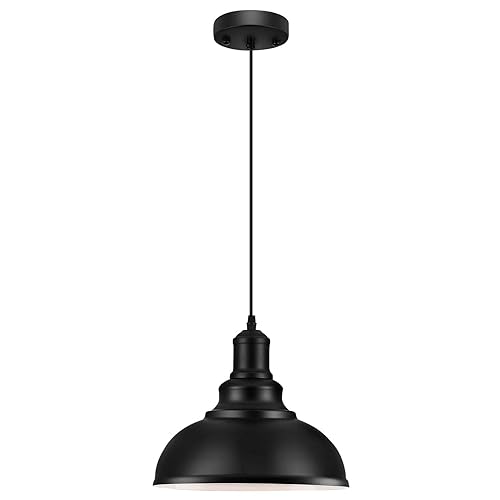
Ambient light usually starts overhead. Pendants over an island or table should hang roughly 30 to 36 inches above the finished surface, and sit about 30 to 36 inches apart when you have more than one. Keep them clear of sightlines to the range hood or open shelving. If you are weighing layouts, Kitchen Lighting Fixtures Ceiling: 7 Steps to Plan the Right Layout walks through spacing and wiring in more detail.
Step 4: Add Under-Cabinet Task Light
Farmhouse kitchens often have deep, open or apron-front sink areas where overhead light casts shadows on the counter. Under-cabinet strips solve that. Mount them toward the front edge of the cabinet bottom so the light falls on the counter rather than the backsplash. For installation details, read Lighting Underneath Kitchen Cabinets: 7 Steps to Even, Glare-Free Light and Under-Cabinet Lighting: Planning Counter Light.
Checklist for Task Lighting
- Measure each run of counter from end to end.
- Choose fixtures that span at least 80 percent of each run, so light overlaps without dark gaps.
- Confirm the light is dimmable and matches the color temperature of your ceiling fixtures.
- Plan an accessible power source or in-cabinet driver before you close up walls.
- Test the layout with a flashlight held at counter height before you commit.
Step 5: Set Color Temperature and Finish
Farmhouse interiors tend to look best under warm white light, usually in the 2700K to 3000K range. Cooler light can make wood tones and painted cabinets look flat or gray. Pick finishes that match the rest of the room: aged brass, oil-rubbed bronze, black iron and wood accents are common choices. Mixing metals is fine if you repeat each finish at least twice.
Common Mistakes to Avoid
- Hanging one large fixture over the center of the room and calling it done.
- Placing pendants too high, which leaves the work surface underlit.
- Mixing very different color temperatures across fixtures.
- Skipping dimmers, so the room is either blazing or dim with no middle setting.
- Choosing fixture sizes by eye instead of measuring the island or table first.
Recommended Gear
A basic LED strip kit with a dimmable driver makes under-cabinet installation far easier, especially if you are working from a plan like the one above. View on Amazon
For ceiling spots, a plug-in or hardwired track system lets you reposition heads without rewiring. View on Amazon
A non-contact voltage tester is essential before cutting into ceilings or cabinets. View on Amazon
FAQ
How high should pendant lights hang over a farmhouse kitchen island?
Most designers suggest hanging them about 30 to 36 inches above the countertop. Adjust slightly for ceiling height and how tall the people using the island are.
What color temperature works best for farmhouse kitchen lighting?
Warm white in the 2700K to 3000K range suits most farmhouse finishes. It keeps wood and cream tones looking inviting rather than cold.
Should I hire an electrician for kitchen lighting work?
Plug-in and battery options need no electrical work, but hardwired fixtures and new circuits should be handled by a licensed electrician. Consult a professional before working on live wiring.
Conclusion
A well-lit farmhouse kitchen layers ambient, task and accent light so each zone works without glare or dark corners. Map your work areas, place fixtures to match them, and keep color temperature warm for the right character. Test the layout before you finalize it, and your kitchen will look as good at night as it does at breakfast.
Ready to choose one?
About Colin Foster
Colin Foster is part of our editorial team and reviews and edits our kitchen design & remodeling guides, checking product details against manufacturer specifications and owner feedback.