 By Lauren Holland
Updated November 2026
Choosing a kitchen countertop comes down to how you cook, how much maintenance you want, and how the surface will look over the years. This guide answers the question of which countertops are best for kitchen remodels by focusing on three solid-wood butcher block options. We compare wood species, slab dimensions, reversibility and typical uses, so you can match a surface to your layout and daily habits. Which kitchen countertops are the best depends on your priorities, and wood works well for prep-heavy kitchens.
Our top picks at a glance
- 1
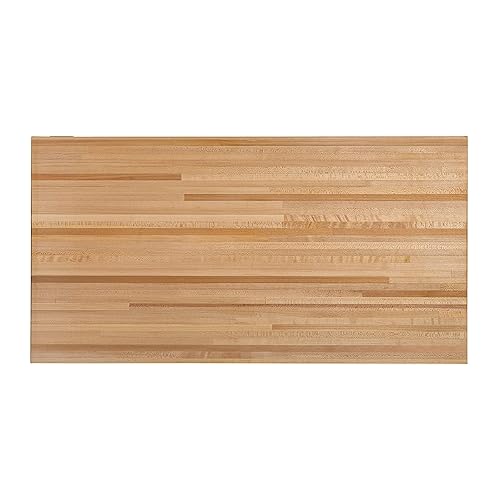 TOP CHOICEBest overallButcher Block Countertop, 42 x 25 Inches, USA Grown Solid Hard MapleView on Amazon
- 2
 Best for reversible useButcher Block Counter Top, USA Grown Oak Solid Hardwood, ReversibleView on Amazon
- 3
 Best budget pick for DIY36'' x 25'' Butcher Block Countertop, 3ft Birch Slab Counter TopView on Amazon
Our Top Picks
Quick Comparison
| Product | Best for | Key feature |
|---|---|---|
| Butcher Block Countertop, 42 x 25 Inches (Solid Hard Maple) | Kitchen islands and laundry surfaces | Dense USA-grown hard maple |
| Butcher Block Counter Top (Solid Oak) | Reversible prep and serving | Two usable faces |
| 36” x 25” Butcher Block Countertop (Birch Slab) | DIY kitchen projects | Compact, solid birch slab |
Butcher Block Countertop, 42 x 25 Inches, USA Grown Solid Hard Maple
Butcher Block Countertop, 42 x 25 Inches, USA Grown Solid Hard Maple Hardwood, for Kitchen Island, Laundry Room, RV, Camper, Office Desk, Bar Table, Prefinished with Food-Safe Oil, 1.5" Thick
Best for: Kitchen islands and laundry surfaces that need a durable, close-grained top.
This slab suits homeowners who want a warm wood surface on an island or secondary counter. Hard maple is one of the more common choices for cutting surfaces because its tight grain resists deep scoring. For another angle, check out Side Table Marble Top vs Wood Top: Which Should You Choose?.
Key specs:
- 42 x 25 inch slab size
- Solid hard maple, USA grown
- Suited to island and laundry use
Pros:
- Dense, close-grained surface
- Generous working area
- Warm, consistent color
Cons:
- Needs regular oiling
- Shows water marks if left wet
Bottom line: A strong pick if you want a durable wood island top and are willing to oil it regularly.
Butcher Block Counter Top, USA Grown Oak Solid Hardwood, Reversible
Butcher Block Counter Top, USA Grown Oak Solid Hardwood Countertop, Wood Slabs for Kitchen, Reversible, Both Side Polished, Prefinished with Food-Safe Oil, 1.5" Thickness, 84" L x 25" W
Best for: Reversible prep and serving where you want two usable faces.
Oak brings a more pronounced grain than maple and suits kitchens with a rustic or farmhouse feel. The reversible design lets you use the second face once the first shows wear.
Key specs:
- Solid oak hardwood, USA grown
- Reversible, both faces usable
- Wood slab format
Pros:
- Two usable surfaces
- Pronounced, attractive grain
- Good for rustic kitchens
Cons:
- Open grain can trap food particles
- Requires consistent sealing
Bottom line: Best for cooks who value a reversible surface and a classic wood look.
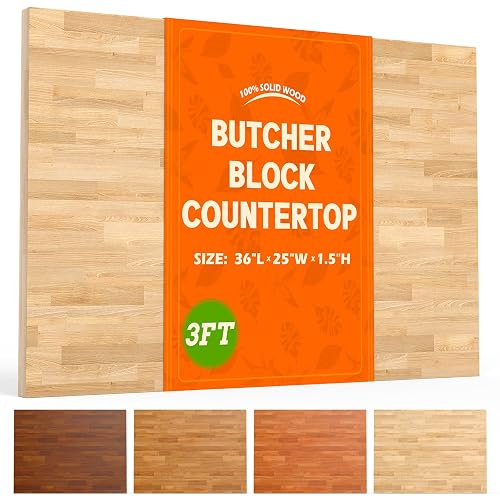
36” x 25” Butcher Block Countertop, 3ft Birch Slab Counter Top
36'' x 25'' Butcher Block Countertop, 3ft Birch Slab Counter Top, Solid Wood Table Top for DIY Kitchen Island, Workbench, Washer Dryer, Coffee Bar Table, 1.5"Th Unfinished
Best for: DIY kitchen projects and compact runs that need a simple wood top.
This birch slab is a practical option for a small counter, a prep station or a DIY build. Its compact footprint makes it easier to handle during installation.
Key specs:
- 36 x 25 inch slab size
- Solid birch wood
- Suited to DIY installation
Pros:
- Easy to handle and cut to fit
- Good for small or secondary counters
- Clean, light wood tone
Cons:
- Softer than maple or oak
- Limited surface area
Bottom line: A sensible choice for a DIY project or a small prep counter.
Buying Guide
Wood species and hardness
Hardness affects how well a surface resists knife marks and dents. Hard maple is denser than oak or birch, so it generally holds up better under heavy chopping. Check the species on the listing before you buy, since it determines both durability and appearance.
Good picks for this: Butcher Block Countertop, 42 x 25 Inches (Solid Hard Maple); Butcher Block Counter Top (Solid Oak)
Slab size and layout fit
Measure your run before ordering. Most countertop depths run about 25 inches, and slab length should cover the full run or be joined with a seam. Plan seams away from the sink and cooktop.
Good picks for this: 36” x 25” Butcher Block Countertop (Birch Slab); Butcher Block Countertop, 42 x 25 Inches
Reversibility and wear
A reversible slab can be flipped when one face shows heavy use, extending its working life. This matters most on high-traffic prep areas where scoring builds up quickly.
Good picks for this: Butcher Block Counter Top (Solid Oak)
Maintenance and sealing
Wood countertops need periodic oiling, typically with food-safe mineral oil, and they should be wiped dry after use. Plan on a regular maintenance routine if you choose any solid wood surface.
Good picks for this: Butcher Block Countertop, 42 x 25 Inches (Solid Hard Maple)
Use case and budget fit
Match the surface to the job. A large island suits a dense slab, while a compact DIY counter can use a smaller birch piece. Consider whether the countertop will also be a heat zone or a water zone.
Good picks for this: 36” x 25” Butcher Block Countertop (Birch Slab)
FAQ
Are wood countertops good for a kitchen?
Yes, for prep-focused kitchens and islands. Solid wood is warm, repairable by sanding and resealing, and works well for cutting. It does require regular oiling and should be kept dry around the sink.
Which wood is most durable for countertops?
Hard maple is generally considered one of the denser options for butcher block. Oak is also durable but has a more open grain, so it needs careful sealing.
Can I install a butcher block countertop myself?
Many homeowners do, especially with smaller slabs. Confirm cabinet alignment and seam placement before cutting, and consult a professional installer for complex layouts.
How often should wood countertops be oiled?
Oil them when the surface looks dry or light in color, often every few weeks at first and then less often. Use food-safe mineral oil and wipe off any excess.
Conclusion
For most kitchens, the best countertop depends on your use. The solid hard maple slab suits islands and heavy prep, the reversible oak slab fits rustic kitchens that want two usable faces, and the birch slab works for compact DIY counters. Wood countertops ask for regular care, but they reward you with a warm, repairable surface.
Sources
- Guidance on food-safe materials and cutting surfaces (fda.gov)
- Standards for food equipment and surface materials (nsf.org)
Before you buy: helpful guides
Related reading
- What Stone Is Best for Kitchen Countertops? Granite vs Quartz (2026)
- Waterproof Contact Paper for Kitchen Countertops: 6 Best Picks Compared
- Top 7 Tools and Kits for Installing Granite Kitchen Countertops
- Top 7 Modern White Kitchens with Black Countertops Looks: Buyer's Guide
About Lauren Holland
Lauren Holland is part of our editorial team and reviews and edits our kitchen design & remodeling guides, checking product details against manufacturer specifications and owner feedback.